How to Read Fertilizer Labels for Cannabis Crops | NPK, EC, pH & Nutrient Forms

How to Read Fertilizer Labels for Cannabis Crops
For commercial cannabis growers, fertilizer labels are more than a compliance requirement or a quick reference for NPK. They provide critical information about nutrient concentration, nitrogen form, solubility, root-zone pH impact, and application rates. When interpreted correctly, they help growers build more precise feeding programs and reduce variability across the crop cycle.
Whether you are fertigating in peat-based media, irrigating coco, or managing a multi-zone facility, understanding fertilizer labels can help improve nutrient efficiency, protect root health, and support more consistent plant performance.
Why fertilizer labels matter in cannabis cultivation
Cannabis is a high-value crop that responds quickly to changes in the root zone. Small imbalances in fertility can influence vegetative vigor, internode length, canopy density, flower set, and final quality. That is why a fertilizer label should be read as a technical document, not just as packaging.
The front-of-bag analysis is only one part of the story. Commercial growers also need to look at nutrient sources, nitrogen types, potential acidity or basicity, and mixing characteristics to determine whether a product fits their production system.
What fertilizers provide to cannabis plants
Fertilizers supply essential mineral nutrients that may not be sufficiently available in irrigation water or in the growing medium itself. These nutrients can come from mined materials, synthetic manufacturing, or organic sources. Regardless of origin, once dissolved and available in the root zone, nutrients are absorbed by the plant roots in ionic form.
In other words, cannabis roots respond to available nutrient ions, not to whether the product is marketed as conventional or organic. What matters most is nutrient availability, concentration, timing, and compatibility with your production strategy.
The main fertilizer categories used in cannabis production
Cannabis facilities may use several fertilizer formats depending on the production model:
- Liquid fertilizers
- Water-soluble fertilizers
- Dry granular fertilizers
- Controlled-release fertilizers
- Organic fertilizers
Each format has operational implications. Water-soluble and liquid fertilizers are often preferred in cannabis fertigation programs because they offer greater control over dose and timing. Controlled-release and organic fertilizers may be useful in selected systems, but their release patterns are typically less precise and influenced by moisture, temperature, and microbial activity.
Understanding the three nutrient groups on a fertilizer label
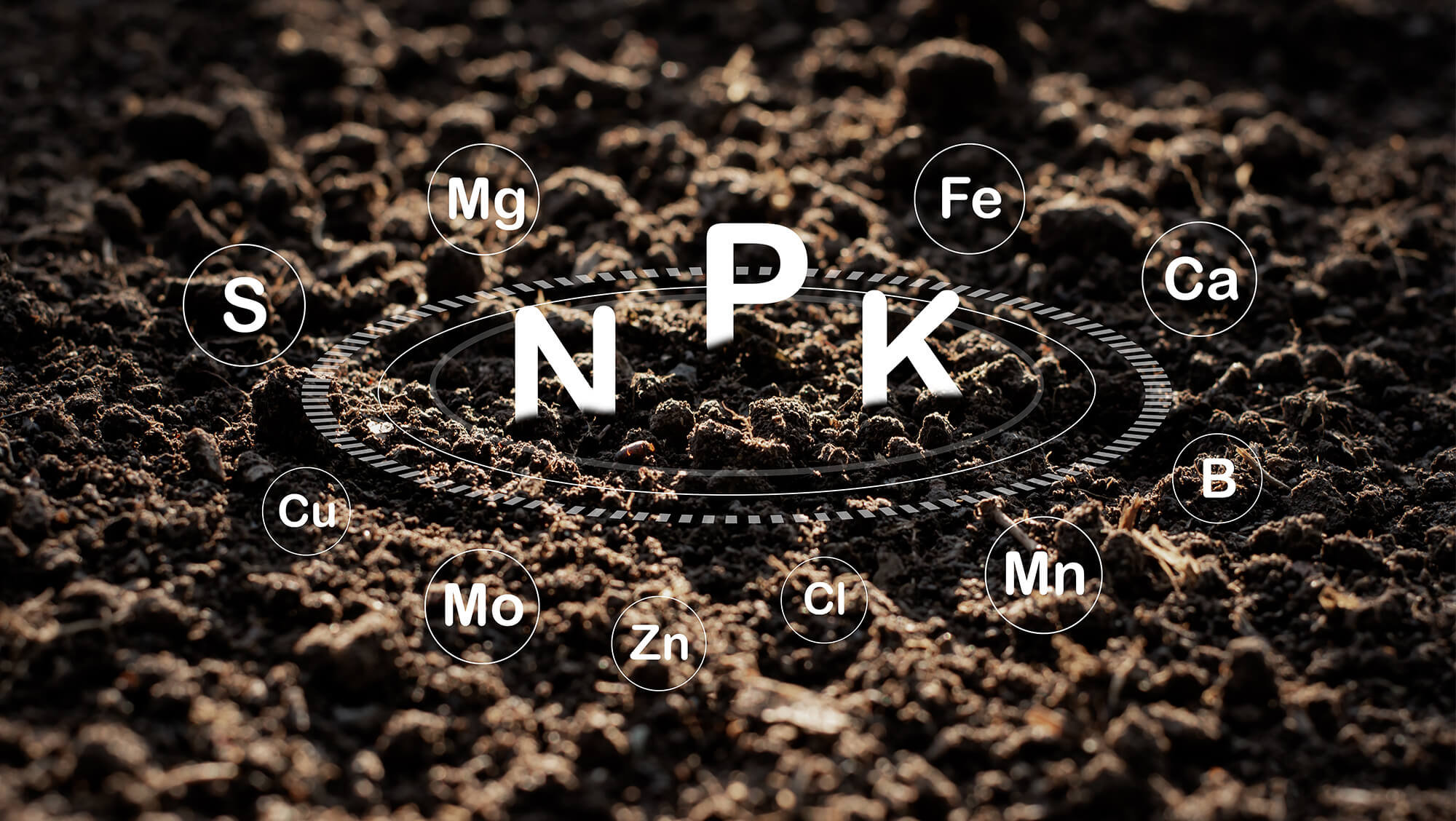
Primary Macronutrients
These are the nutrients cannabis needs in the largest quantities:
- Nitrogen (N)
- Phosphorus, listed as phosphate (P2O5)
- Potassium, listed as potash (K2O)
These macronutrients support vegetative growth, energy transfer, water regulation, and reproductive development.
Secondary Macronutrients
These are also essential and often play a major role in crop quality and structural performance:
- Calcium (Ca)
- Magnesium (Mg)
- Sulfur (S)
In intensive cannabis production, calcium and magnesium are especially important because of their impact on cell development, chlorophyll function, and crop stability under high-demand conditions.
Micronutrients
These are required in smaller amounts but remain essential:
- Iron (Fe)
- Manganese (Mn)
- Copper (Cu)
- Molybdenum (Mo)
- Boron (B)
- Zinc (Zn)
- Nickel (Ni)
- Chlorine (Cl)
- Sodium (Na)
- Silicon (Si)
- Cobalt (Co)
Micronutrient inclusion varies by fertilizer product and growing system.
What the NPK numbers really mean
The three numbers on a fertilizer label, such as 20-10-20, represent the minimum percentage by weight of:
- Total nitrogen (N)
- Available phosphate (P2O5)
- Soluble potash (K2O)
A 20-10-20 fertilizer contains:
- 20% nitrogen
- 10% phosphate
- 20% potash
This is where growers need to be careful. Phosphorus and potassium are not listed in elemental form. They are shown as oxide equivalents. That means the actual amount of elemental phosphorus and elemental potassium is lower than the label numbers suggest.
For example, 10 kg of 20-10-20 contains:
2.0 kg of nitrogen
1.0 kg of P2O5equal to about 0.44 kg of elemental phosphorus
2.0 kg of K2Oequal to about 1.66 kg of elemental potassium
This distinction matters when comparing products or fine-tuning a cannabis nutrient program.
Complete vs. incomplete fertilizers
A complete fertilizer contains all three primary macronutrients: N, P, and K.
An incomplete fertilizer contains only one or two of them. Many cannabis fertility programs use incomplete fertilizers as part of two-part or multi-part systems because they offer more flexibility when adjusting nutrient ratios through propagation, vegetative growth, and flowering.
These products may still include secondary nutrients and micronutrients.
How to read the most important sections of a fertilizer label
1. Product name
The fertilizer name may refer to:
- The analysis, such as 20-10-20
- A specific nutrient source, such as calcium nitrate
- A crop or use pattern designation
The product name alone is not enough to evaluate fit. Always look deeper into the guaranteed analysis.
2. Guaranteed analysis
This section lists the minimum percentages of nutrients in the product. It usually starts with primary macronutrients, followed by secondary macronutrients and micronutrients. It may also indicate where those nutrients come from.
For cannabis growers, this is one of the most useful parts of the label because it clarifies exactly what the product contributes to the feed program.
3. Nitrogen forms
Nitrogen may appear in different forms, including:
- Nitrate nitrogen
- Ammoniacal nitrogen
- Urea nitrogen
This is important because nitrogen form affects plant response and substrate pH.
In general:
- More ammoniacal nitrogen and urea nitrogen tend to lower root-zone pH over time
- More nitrate nitrogen tends to have a more basic effect
In cannabis systems, this influences how a fertilizer behaves in peat and coco, especially when paired with specific water alkalinity levels.
4. Potential acidity or basicity
This value tells you whether a fertilizer is likely to push substrate pH down or up over time.
This is especially important in cannabis cultivation because root-zone pH directly affects nutrient availability. Even a good fertility program can underperform if pH drift limits uptake efficiency.
5. Solubility
Solubility indicates how much fertilizer can dissolve in water at a given temperature. This affects:
- Stock tank preparation
- Injector consistency
- Line cleanliness
- Uniform nutrient delivery
Poorly dissolved fertilizer can lead to sediment, uneven feed strength, and equipment issues.
6. Water quality fit;
Some fertilizers are better suited for low, moderate, or high alkalinity water. Matching the product to your water chemistry is essential for pH management and nutrient stability.
In commercial cannabis facilities, this is especially relevant when using reverse osmosis water, blended water, or regional water sources with elevated bicarbonates.
7. Application rate
Application guidance may include:
- Nitrogen ppm
- Injector ratio
- EC relationship
- Weight per volume of water
- Rate per cubic yard or cubic meter of substrate
For cannabis growers, this information helps verify whether the feed program aligns with crop stage, irrigation frequency, and production goals.
8. Longevity for controlled-release fertilizers
Controlled-release fertilizers often list a release period in days or months. These estimates are usually based on average temperatures. Since nutrient release speeds up in warmer conditions, growers should interpret longevity as a guide, not a fixed guarantee.
9. Storage and safety
Fertilizer labels also include storage and handling instructions. Maintaining product integrity is important in cannabis facilities, where consistency and sanitation are critical to crop performance.
Why fertilizer labels should be evaluated with the growing medium
A fertilizer does not act independently. Its performance depends on the physical and chemical environment around the roots.
For example, a high-porosity substrate can influence irrigation frequency, dryback behavior, oxygen availability, and salt movement. A peat-based medium such as PRO-MIX® HP® supports aeration and drainage, while AGTIV REACH® mycorrhizae help improve nutrient and water uptake in the root zone. In coco-based systems, water retention and cation exchange characteristics also influence nutrient behavior and fertigation strategy.
That is why fertilizer labels should always be interpreted in the context of the growing medium, irrigation method, and root-zone management plan.
Common mistakes cannabis growers make when reading fertilizer labels
Even experienced growers can overlook details that affect crop performance. Common mistakes include:
- Focusing only on the front-label NPK
- Ignoring nitrogen form
- Overlooking the effect on substrate pH
- Assuming all nutrients release at the same speed in organic fertilizers
- Forgetting that phosphorus and potassium are listed as oxide forms
- Not checking solubility before mixing concentrated stock solutions
- Failing to match the fertilizer to water alkalinity
These issues can contribute to nutrient imbalance, pH drift, unstable EC, and inconsistent plant development.
Best practices for choosing a fertilizer based on the label
Before selecting a fertilizer for cannabis production, ask:
- Does the analysis fit the crop stage?
- What nitrogen forms are included?
- Does the product provide the calcium and magnesium my crop requires?
- Will it help manage or worsen pH in my irrigation system?
- Is it fully compatible with my water quality?
- Is it soluble enough for my stock tank and injector setup?
- Does the suggested rate align with my target EC and fertigation frequency?
The label should support the overall strategy, not work against it.
Final thoughts on reading fertilizer labels for cannabis
Reading fertilizer labels correctly is one of the simplest ways to make more informed fertility decisions in cannabis cultivation. Beyond NPK, labels provide insight into nutrient form, pH behavior, solubility, water compatibility, and application rates. These details can help commercial growers improve feed precision, protect root-zone performance, and reduce avoidable crop variability.
The more closely you read the label, the better positioned you are to build a nutrient program that supports consistent growth, efficient uptake, and stronger production outcomes.
Quick FAQ: Reading Fertilizer Labels for Cannabis
What should cannabis growers look at first on a fertilizer label?
Start with the guaranteed analysis, not just the front-label NPK. You want to know what nutrients the product actually supplies, in what amounts, and in which forms.
What do NPK numbers really mean on a cannabis fertilizer label?
The numbers show the percentage of nitrogen (N), phosphate (P2O5), and potash (K2O) in the product. Just remember: phosphorus and potassium are listed as oxide forms, not elemental forms, so the actual elemental amount is lower.
Why do nitrogen forms matter in cannabis cultivation?
Because nitrogen form affects both plant response and root-zone pH. In general, more ammoniacal nitrogen and urea nitrogen tend to push pH down over time, while more nitrate nitrogen tends to have a more basic effect.
How do EC, pH, and water quality affect fertilizer performance?
A fertilizer never works in isolation. Its performance depends on your water alkalinity, target EC, irrigation strategy, and growing medium. A product that works well in one setup may create pH drift or nutrient issues in another.
What are the most common mistakes growers make when reading fertilizer labels?
The big ones are:
- focusing only on NPK
- ignoring nitrogen form
- overlooking pH impact
- not checking solubility
- forgetting water quality compatibility
- assuming the label rate automatically fits the crop
You Might Like
See All Insights