Potassium plays an essential role in healthy cannabis production. While nitrogen and phosphorus often get most of the attention, potassium is equally important to plant function, especially in commercial growing systems where irrigation, fertigation, and root-zone management all influence crop performance. Understanding the role of potassium in cannabis can help growers recognize early issues, maintain nutrient balance, and support more consistent plant development.
What Does Potassium Do in Cannabis Plants?
Potassium, identified by the symbol K, is one of the three primary macronutrients required by cannabis plants, alongside nitrogen (N) and phosphorus (P). On fertilizer labels, the third number in a formula such as 20-10-20 refers to potassium, expressed as K₂O.
Unlike nitrogen and phosphorus, potassium is not mainly used to build structural plant compounds. Instead, it supports several key physiological functions in cannabis plants, including:
- Cell turgor and water balance
- Stomatal regulation and transpiration
- Enzyme activation
- Movement of water and nutrients within plant tissues
These functions are central to plant health, which is why potassium should be managed carefully in any cannabis cultivation program.
Potassium Deficiency in Cannabis
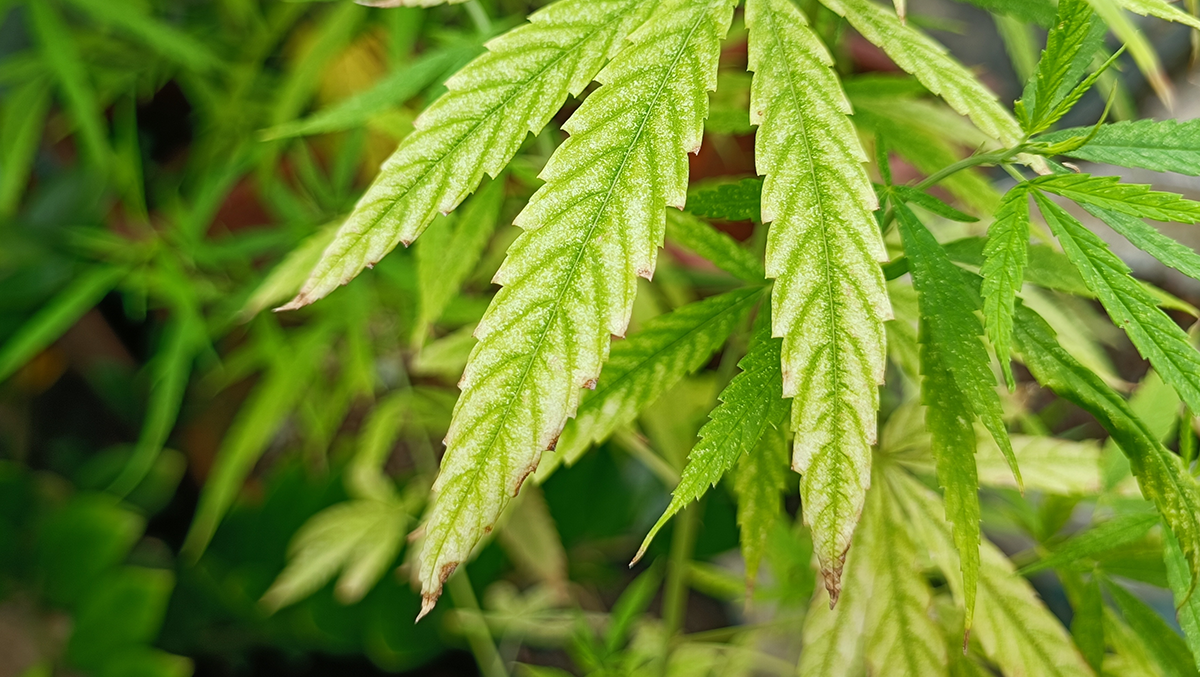
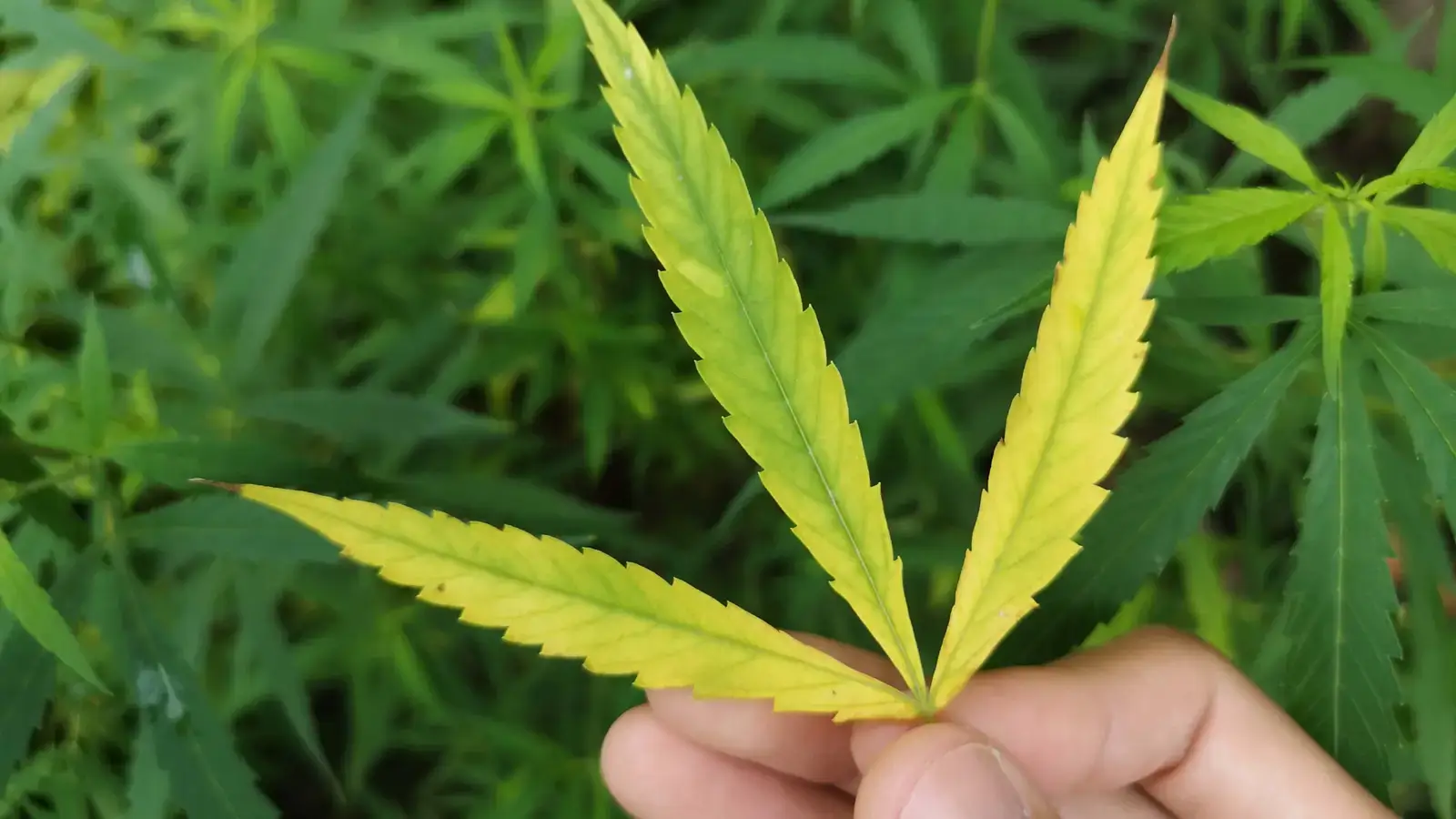
Because potassium is a mobile nutrient, a cannabis plant can relocate it from older tissue to newer growth when supply is limited. As a result, potassium deficiency in cannabis usually appears first on older leaves.
Common potassium deficiency symptoms in cannabis
Growers may observe:
- Older leaf margins that turn yellow
- Browning older leaf edges, leaf tip burn, or marginal scorching as symptoms progress
- Chlorosis that develops into necrosis in affected tissue
- Reduced vigor and less robust growth
- In some cases, slower development or stunted growth
These symptoms can resemble other nutrient issues or root-zone stress, so visual diagnosis alone may not always be enough. In commercial cannabis production, tissue analysis and growing media testing are useful for confirming whether potassium is limiting crop performance.
What Causes Potassium Deficiency in Cannabis?
In many cases, potassium deficiency in cannabis is linked to an insufficient supply in the fertigation program. However, root-zone conditions can also affect potassium uptake.
Potential causes include:
- Low potassium concentration in the fertilizer program
- Nutrient antagonism from excess calcium, magnesium, or sodium
- Salt buildup in the root zone
- Irrigation or fertigation imbalances
In soilless growing media, potassium availability is generally not affected by pH as some other nutrients. For that reason, potassium issues in cannabis cultivation are often more closely related to feeding strategy and root-zone chemistry than to pH.
Can Cannabis Get Too Much Potassium?
Potassium is not typically discussed in terms of direct toxicity, but excess potassium can still create problems. When potassium levels become too high, it is taken up in greater ratio to calcium and magneisum. This kind of nutrient antagonism may lead to calcium and/or magnesium deficiency symptoms, even when calcium and magnesium are present at sufficient levels in the growing medium or fertilizer solution. Monitoring plant tissue, irrigation water, and root-zone conditions can help identify these imbalances early.
How to Manage Potassium in Cannabis Production
A balanced fertility program is the best foundation for proper potassium management. Since both deficiency and oversupply can affect crop health, growers should take a measured approach rather than simply increasing potassium when symptoms appear.
Best practices include:
- Reviewing fertilizer formulations and application rates
- Monitoring irrigation water quality
- Testing the growing medium or root zone regularly
- Using plant tissue analysis to support decision-making
- Watching for nutrient interactions with calcium and magnesium
For professional growers, potassium management should be part of a broader strategy focused on nutrient balance, root health, and crop consistency.
Why Potassium Matters in Cannabis Cultivation
The role of potassium in cannabis goes beyond basic nutrition. Potassium supports water regulation, metabolic activity, and nutrient movement throughout the plant. When levels are not properly balanced, growers may see symptoms that affect plant vigor and complicate crop management.
In intensive production systems, maintaining the right potassium balance can help support healthier plants and more consistent results across the crop cycle.
Final Thoughts
Potassium is a core part of any effective nutrition program for cannabis plants. By understanding the symptoms of potassium deficiency in cannabis, the causes of poor uptake, and the risks of nutrient imbalance, growers can make better-informed decisions in the fertigation program and root zone.
For commercial cannabis growers, the most reliable approach is regular monitoring combined with a balanced feeding strategy. When potassium is managed correctly, it supports essential plant functions that contribute to strong, stable crop performance.